Trying to choose between a townhome and a single-family home in Brandon? You’re not alone. Your decision affects your budget, maintenance, commute, and how you live day to day. In this guide, you’ll see a clear, local comparison to help you decide what fits your life now and in the years ahead. Let’s dive in.
How Brandon shapes your options
Brandon sits within the Tampa Bay region, and many residents commute into Tampa, Temple Terrace, and nearby employment hubs. That matters because townhomes often cluster near major corridors and retail areas, while single-family homes tend to spread across established subdivisions and master-planned neighborhoods.
- Townhomes often sit closer to Brandon Blvd, US-301, and I-75, and near shopping like Brandon Town Center.
- Single-family homes are more common in quieter subdivisions with yards and neighborhood amenities.
- Commute routes, proximity to retail, and local school boundaries influence demand and pricing across Brandon.
If you want lower maintenance and quick access to daily needs, a townhome location might appeal. If you want a yard, space to grow, and more privacy, detached neighborhoods usually deliver that.
Cost: purchase price and monthly budget
In many Brandon submarkets, townhomes are priced lower than similarly located single-family homes. That said, what you pay each month depends on more than the purchase price. You need to look at the full monthly picture.
Here’s a simple way to compare:
- Mortgage payment: principal and interest based on price and rate.
- Property taxes: tied to assessed value and local millage rates.
- Homeowners insurance: varies by structure type and location.
- HOA dues: common for townhomes and some single-family communities.
- Utilities and maintenance: exterior care is usually lower for townhomes.
A townhome’s HOA dues can make your total monthly cost predictable. A single-family home might have lower or no HOA dues, but you carry more of the exterior expenses yourself. Detached homes on larger lots can also see higher total tax bills, even with the same tax rate.
HOA dues: what you get and what to watch
Townhome HOA dues typically cover exterior maintenance, landscaping, common areas, and sometimes roofs and amenities. In some associations, the master policy insures exterior elements and shared spaces. That can be a value if you want less upkeep.
What to look for when you compare communities:
- What is included: exterior, roof, landscaping, amenities, insurance coverage for common areas.
- Reserves and financial health: recent meeting minutes, reserve studies, and whether special assessments are planned or underway.
- Dues trend: steady, rising, or recently increased to address capital projects.
Elevated dues are not automatically a negative. The key is understanding what you get, the association’s reserves, and the plan for long-term repairs.
Space, privacy, and day-to-day living
Lifestyle usually drives the choice as much as price. Townhomes and single-family homes feel different in daily life.
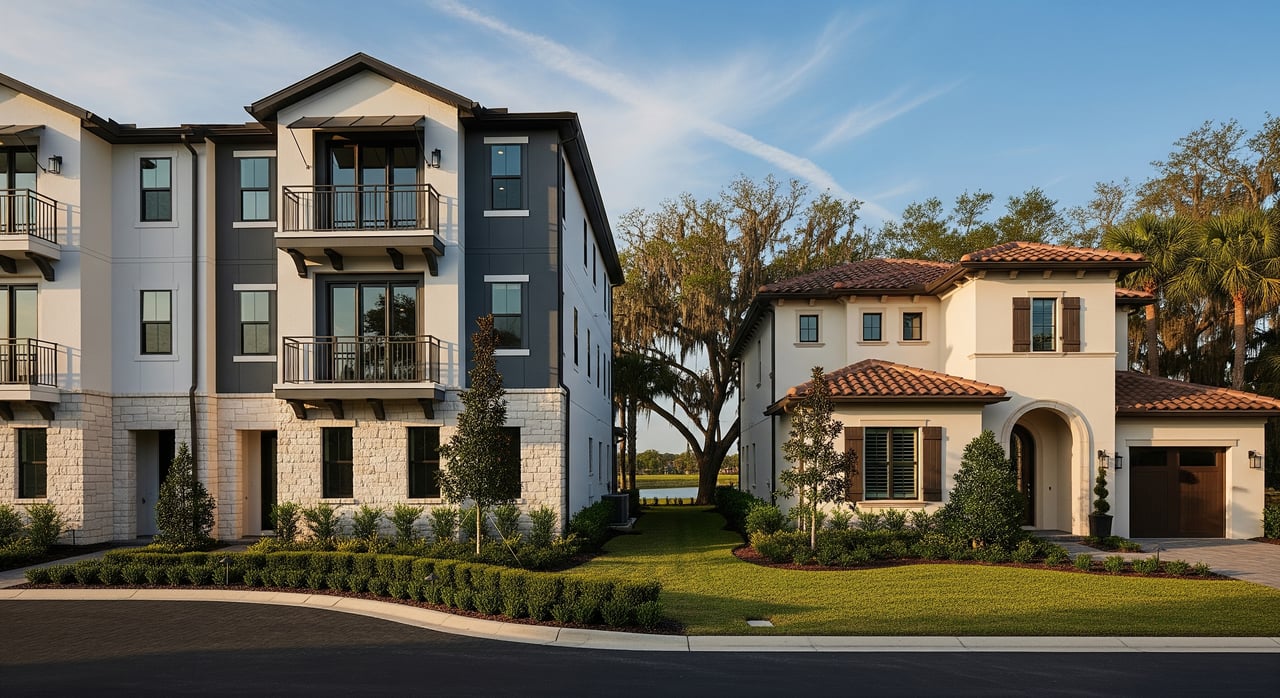
- Townhome: limited private yard or patio, shared walls, and often shared green space. Expect lower personal maintenance. This fits if you value convenience and travel often.
- Single-family: more outdoor space, more privacy, and flexibility to add features like a garden, patio, or play area, subject to local rules. This fits if you want room for pets, hobbies, or gatherings.
Noise can be a factor in attached housing. If you’re sensitive to sound, ask about construction type and visit at different times of day.
HOA rules and flexibility
Townhomes usually come with HOA governance. Many single-family neighborhoods do too, while some do not.
Common rules include:
- Exterior paint, fencing, and landscaping standards.
- Rental policies and lease minimums.
- Parking, guest parking, and street parking rules.
- Pet policies and limits on exterior changes.
If you plan to rent in the future, work from home, or add exterior features, review the covenants and recent HOA minutes early. That is especially important in Brandon communities where demand is strong and standards are enforced to protect property values.
Insurance and storm or flood risk in Brandon
Florida’s insurance market has seen changes, and carriers look closely at wind, hurricane, and flood risks. Brandon includes areas outside high-risk flood zones, but localized flood exposure still exists.
- Townhome policies: you will likely carry a policy focused on interior and contents, plus any interior structure not covered by the association’s master policy. Confirm exactly what the master policy covers and how deductibles are allocated.
- Single-family policies: you carry full dwelling coverage for the structure, with a separate flood policy if your home is in a flood zone or your lender requires it.
Smart steps:
- Verify the flood zone for the specific property using official maps and local guidance.
- Review the HOA insurance certificate and ask about master policy deductibles and recent claims.
- Get quotes from a local insurance professional before you make an offer so your numbers are real, not estimated.
Financing and appraisal: what to know
Both townhomes and single-family homes are generally financeable. The difference often comes down to how the community is structured.
- Fee-simple townhome: typically treated like a single-family attached home by many lenders.
- Condominium townhome: may trigger project reviews and eligibility checks for conventional, FHA, or VA loans.
Appraisals rely on comparable sales. In some Brandon pockets, there may be fewer recent townhome comps, which can affect valuation timing and analysis. Clarify whether a property is fee-simple or a condo association early, since that can change the underwriting documents your lender needs.
Resale, appreciation, and demand
In many markets, single-family homes attract a broader buyer pool and can show strong long-term appreciation, depending on the lot and neighborhood. Townhomes often appeal to first-time buyers, commuters, and downsizers because of lower maintenance and location convenience.
Key drivers of resale in Brandon:
- HOA health: reserves, assessments, and insurance can influence buyer confidence.
- Location: proximity to commute routes and daily needs.
- Schools: attendance zones can shape demand for many family buyers.
Market performance varies by price tier and neighborhood. In entry-price segments, townhomes can turn over faster when detached homes are out of reach for many buyers. In family-oriented segments, single-family homes can move quickly when priced right.
A Brandon buyer’s checklist
Use this list to compare specific homes and communities with confidence:
- Confirm property type and title: fee-simple townhome, condominium, or detached single-family.
- Review HOA documents: declaration, bylaws, recent minutes, reserve study, and insurance certificate.
- Understand HOA coverage: what the master policy covers, deductibles, and recent claims history.
- Compare total monthly cost: mortgage, taxes, insurance, HOA dues, and typical utilities.
- Verify flood zone and elevation: use official flood maps and county resources.
- Get real insurance quotes: wind, hurricane, and flood if applicable.
- Ask your lender about project eligibility: especially for condo associations.
- Pull local comps: recent townhome vs single-family sales in the immediate area.
- Inspect with local expertise: attached versus detached maintenance items can differ.
- Check parking and guest policies: garages, driveways, street parking, and visitor rules.
- Note commute and daily convenience: access to Brandon Blvd, US-301, I-75, and retail.
- Look into new construction nearby: supply can affect pricing and future resale.
Which is right for you?
Consider how you live today and what you expect in the next five years.
Choose a townhome if you want:
- Lower maintenance and predictable monthly costs.
- Proximity to major roads and retail centers.
- A starter option that gets you into the market sooner.
Choose a single-family home if you want:
- A private yard, space for pets, and outdoor living.
- Flexibility for additions or future renovations, subject to rules.
- Broader buyer demand at resale in many segments.
If you are on the fence, compare two specific properties in Brandon through the same lens: total monthly cost, HOA coverage, flood and insurance details, and how the space fits your daily routine.
How a local advisor helps
The nuances in Brandon matter. From confirming whether a townhome is fee-simple or a condo association to spotting HOA reserves and checking flood zones, small details add up to big differences in cost and peace of mind. A local, consultative approach helps you weigh tradeoffs with real numbers and realistic timelines.
If you want a side-by-side comparison of homes on your short list, or a clear plan to win an offer with the right contingencies, reach out. You’ll get patient, straightforward guidance grounded in Brandon’s neighborhoods and current market patterns.
Ready to find the right fit in Brandon? Connect with Ernest Howell III for a local, step-by-step plan.
FAQs
What are the key cost differences in Brandon between townhomes and single-family homes?
- Townhomes often present lower purchase prices and predictable HOA dues, while single-family homes can have higher exterior maintenance and total tax bills due to larger lots.
How do HOAs affect Brandon townhome buyers compared to single-family communities?
- Townhome HOAs typically cover exterior maintenance and common areas, while single-family HOAs, when present, focus more on standards; always review covenants, reserves, minutes, and any assessments.
What should Brandon buyers know about flood risk and insurance before choosing?
- Confirm the property’s flood zone with official maps, review HOA master policy coverage, and obtain quotes for wind and flood; coverage and premiums vary by location and structure type.
Will financing be harder for a Brandon townhome than a detached home?
- It depends on structure: fee-simple townhomes often finance like detached homes, while condo-form projects may require lender project reviews that add documentation.
Which tends to resell faster in Brandon: townhome or single-family?
- It varies by neighborhood and price tier; single-family homes often reach a broader buyer pool, while entry-level townhomes can move quickly when detached options are priced higher.
Are higher HOA dues in Brandon a red flag for buyers?
- Not necessarily; evaluate what dues cover, reserve strength, and assessment history. Dues that fund long-term maintenance can protect values and reduce surprise costs.